January 2026
KVDL Bovine Abortion Diagnostic Summary: 2025
By Gregg A. Hanzlicek, DVM, PhD, PAS
This submission summary includes cases that resulted in a diagnosis. In 2025, 15% of the submissions (232 total submissions) resulted in a definitive diagnosis.
It is important to remember that “negative” result abortion workups do help rule-out multiple disease possibilities.
The following graph summarizes the results for the last five years.
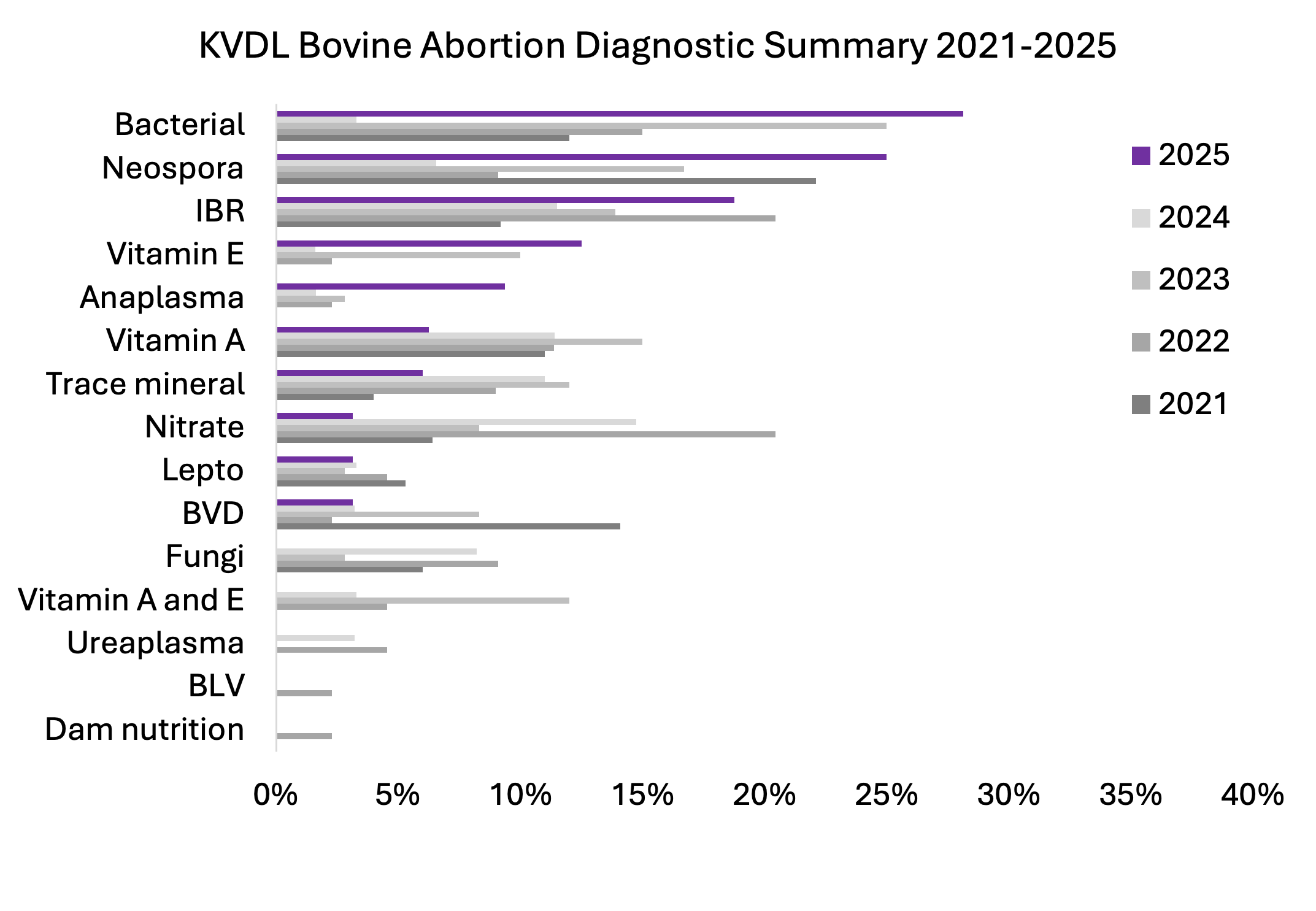
Multiple bacteria were associated with abortions, and for several years bacteria have been a common finding. In 2025, no single bacterium was represented more than others and in many cases the bacterial abortion diagnosis resulted from histological signs and not from culture, because culture was not requested.
We routinely find Neospora caninum through our PCR panel. It is important to note that this organism is the most efficiently transplacentally-passed bovine organism, and in most cases (>95%), abortion is not the post-infection outcome. At least for some of us, a confirmatory histologic observed lesion is necessary to diagnose an abortion due to neospora. Only 5% of the submissions with positive N. caninum PCR results had confirmatory histology completed, and of those only two contained neospora lesions. The PCR-only results may over-estimate the number of neospora abortions.
We continually find IBR in bovine abortions. Of those submissions that we genetically sequence, 41% contain vaccine virus and not naturally occurring field virus. Administering pregnant animals with unknown vaccination histories with a modified live vaccine containing IBR can increase abortion risk.
Nutritional issues continue to impact bovine calving efficiency. Vitamin A and E deficiency continue to be reported in 12% of the 2025 abortion workups. The aborted fetal liver can be tested for Vitamin E content, but fetal liver cannot be assayed for Vitamin A. The best sample to submit for Vitamin determination is serum (red-top tube) from the dams.
The following graph summarizes the 2025 submissions in relation to the test that was requested.
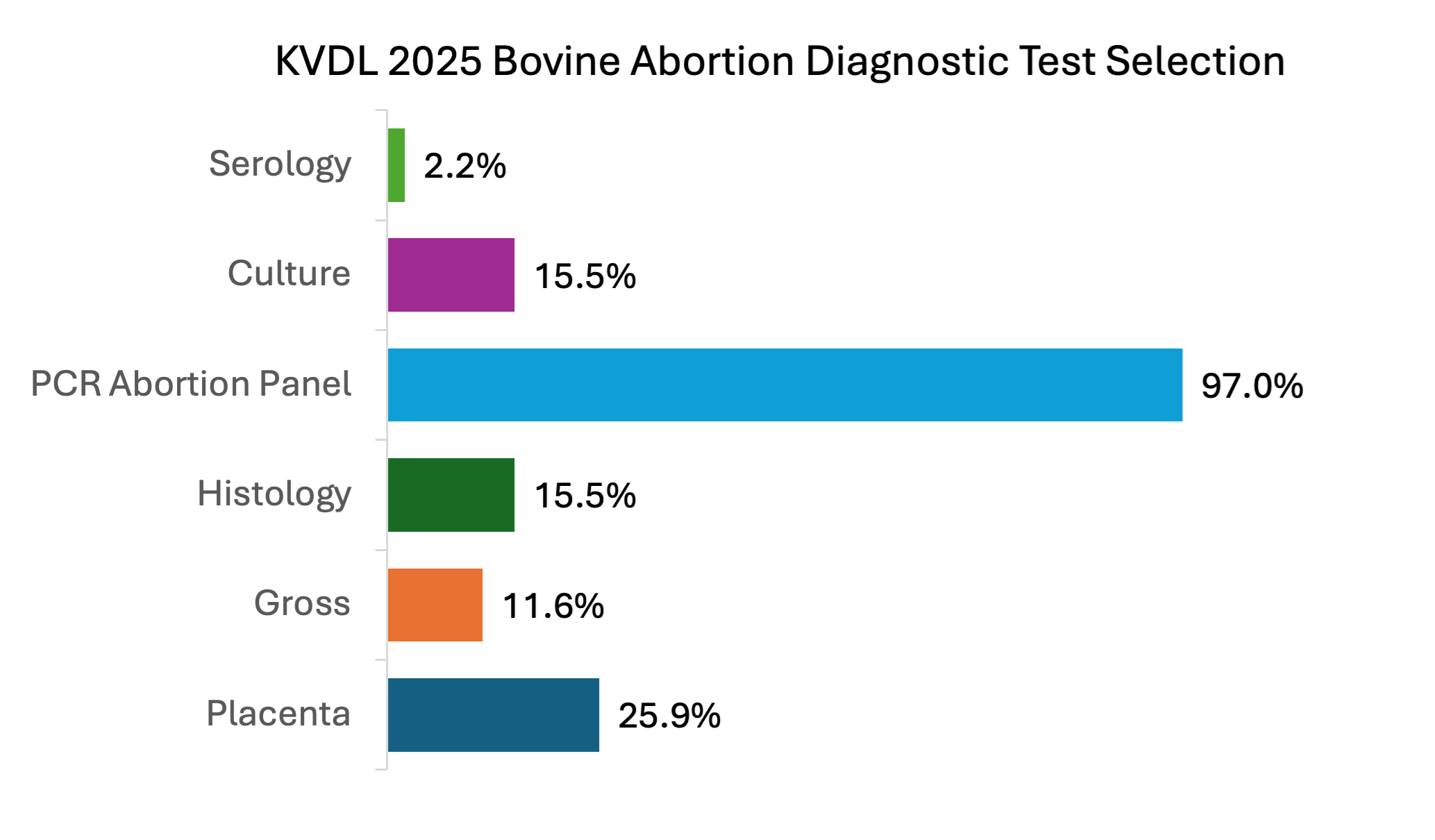
More and more submitters are requesting the PCR abortion tissue panel, only. Submissions when only PCR was completed had 25% less odds of a definitive diagnosis. PCR is a great tool, but relying on this assay alone when investigating abortion epidemics is probably not wise.
This is in comparison to a 6X increase in odds if histology was completed on the submission. The great value of histology in an abortion workup continues to be observed year after year.
Bovine abortion workups continue to be frustrating for all parties involved. Many times, the cause of the abortion cannot be determined for several reasons, but even negative results can help rule out several contributors. Combining test methods in any abortion workup does increase the odds of a definitive diagnosis.
Next: Best Practices for Sampling for Bovine Respiratory Disease
Return to Index