
May 2019
Blue-green Algae Season is Approaching
By Drs. Steve Ensley and Mike Moore
Summer is quickly approaching and along with long summer days and warm weather, the blue-green algae (cyanobacteria) bloom season will soon be here.
|
|
|
Figure 1. Blue-green algae bloom |
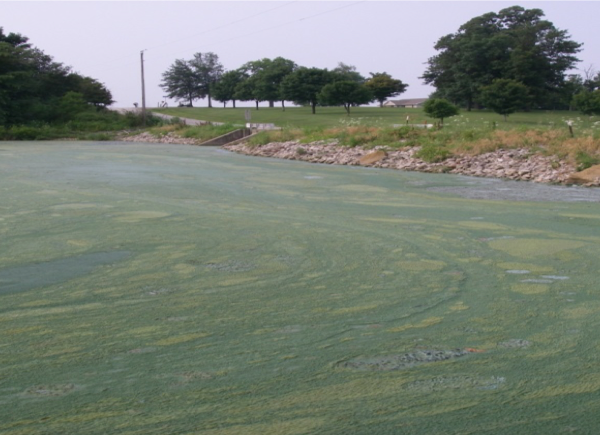
Blue-green algae can be blue, bright green, brown or red. It can look like scum, foam or a mat on the surface. Or it may look like paint floating on the water. (Figure 1) Do not confuse with plants like moss, duck weed, etc.
Not all types of blue-green algae blooms produce toxins, but if blooms are present it is best to assume that the water could be dangerous if used for livestock drinking water.
Cyanobacteria produce neurotoxins and hepatotoxins that can affect livestock, pets and humans when exposed. They live in surface waters in low concentrations and normally cause no problems. During certain weather conditions, these bacteria can be concentrated to a level where toxicity is possible. These weather conditions include: high rainfall events, municipal and agriculture fertilizer run-offs, warm temperatures, and low wind speeds.
Clinical Signs:
Clinical signs of toxicity in all animal species can range from ataxia, dyspnea, weakness, diarrhea, and death. Necropsy findings may be unremarkable or the liver may have a nutmeg appearance.
Diagnosis:
A presumptive diagnosis can be made from clinical signs and recent suspected exposure to cyanobacteria blooms. Microscopy of water or rumen samples and histopathology performed on liver samples can be an aid in diagnosis.
Diagnostic Samples